
Navanetham (Navi) Pillay
/Overview
Navanethem “Navi” Pillay has been at the forefront of developing an international legal order. Born into a family of Indian Tamil descent in Durban, South Africa, she studied law and began defending activists who opposed apartheid. In 1967, she founded her own law firm, and in the 1980s, she studied at Harvard University, earning a Doctor of Juridical Science degree in 1988. Appointed to the High Court of South Africa in 1995, she became a judge and president of the International Criminal Tribunal for Rwanda (ICTR) in 1999. There, she played a pivotal role in establishing that sexual violence, rape and the spread of propaganda could lead to indictments for crimes against humanity and genocide. She later served as a judge on the International Criminal Court (ICC), the United Nations High Commissioner for Human Rights from 2008 to 2014, chair of the UN Independent International Commission of Inquiry on the Occupied Palestinian Territory from 2021 to 2025, and an ad hoc judge on the International Court of Justice (ICJ) in the case accusing Myanmar of genocide.
The Norwegian Nobel Committee recognizes Pillay’s role as a driving force in developing an international system of law and order, emphasizing her judicial rigor, personal integrity and considerable courage. At a time when wars and conflicts are increasing and international courts and legal institutions face political attacks, the committee seeks to reaffirm the importance of resolving conflicts without force or violence. An international legal system that holds war criminals accountable and ensures justice for victims of abuse is essential to building a peaceful world.
Quote
“The biggest violators of human rights are states themselves, by commission or omission.” - National Sovereignty vs. International Human Rights at the University of Georgia School of Law on October 19, 2016.
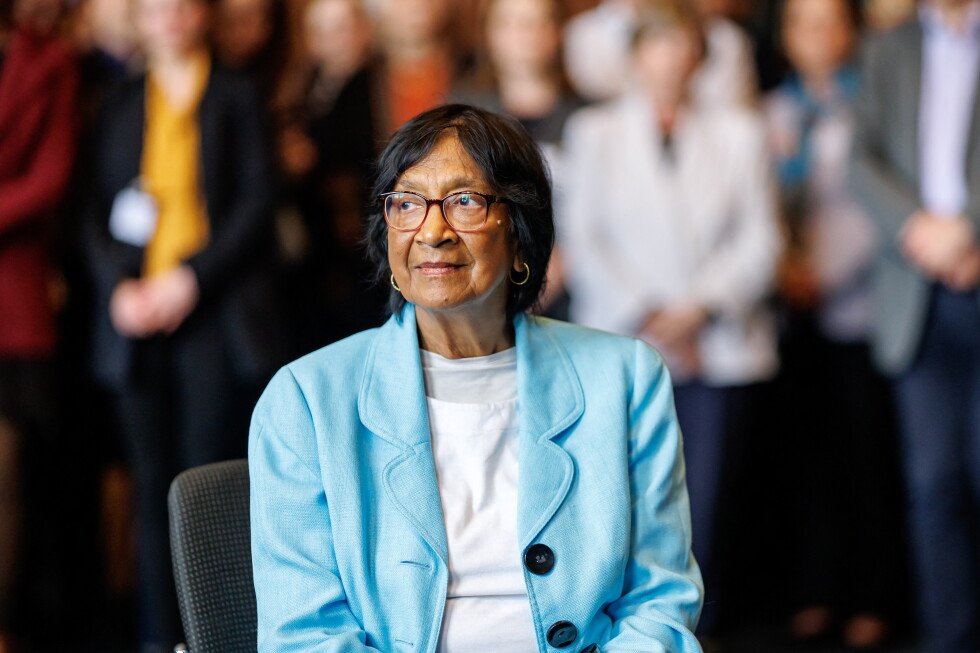
Navi Pillay speaks at the Nuremberg Forum in Nuremberg, Germany, after learning she had won the 2026 Nobel Peace Prize on October 9. Pillay's award drew praise from U.N. officials and criticism from Israel over her role in a U.N. inquiry into Gaza. | Daniel Karmann/picture-alliance/dpa/AP Images

