Navanetham (Navi) Pillay

Overview

Navanethem “Navi” Pillay has been at the forefront of developing an international legal order. Born into a family of Indian Tamil descent in Durban, South Africa, she studied law and began defending activists who opposed apartheid. In 1967, she founded her own law firm, and in the 1980s, she studied at Harvard University, earning a Doctor of Juridical Science degree in 1988. Appointed to the High Court of South Africa in 1995, she became a judge and president of the International Criminal Tribunal for Rwanda (ICTR) in 1999. There, she played a pivotal role in establishing that sexual violence, rape and the spread of propaganda could lead to indictments for crimes against humanity and genocide. She later served as a judge on the International Criminal Court (ICC), the United Nations High Commissioner for Human Rights from 2008 to 2014, chair of the UN Independent International Commission of Inquiry on the Occupied Palestinian Territory from 2021 to 2025, and an ad hoc judge on the International Court of Justice (ICJ) in the case accusing Myanmar of genocide.

The Norwegian Nobel Committee recognizes Pillay’s role as a driving force in developing an international system of law and order, emphasizing her judicial rigor, personal integrity and considerable courage. At a time when wars and conflicts are increasing and international courts and legal institutions face political attacks, the committee seeks to reaffirm the importance of resolving conflicts without force or violence. An international legal system that holds war criminals accountable and ensures justice for victims of abuse is essential to building a peaceful world.

Quote

“The biggest violators of human rights are states themselves, by commission or omission.” - National Sovereignty vs. International Human Rights at the University of Georgia School of Law on October 19, 2016.
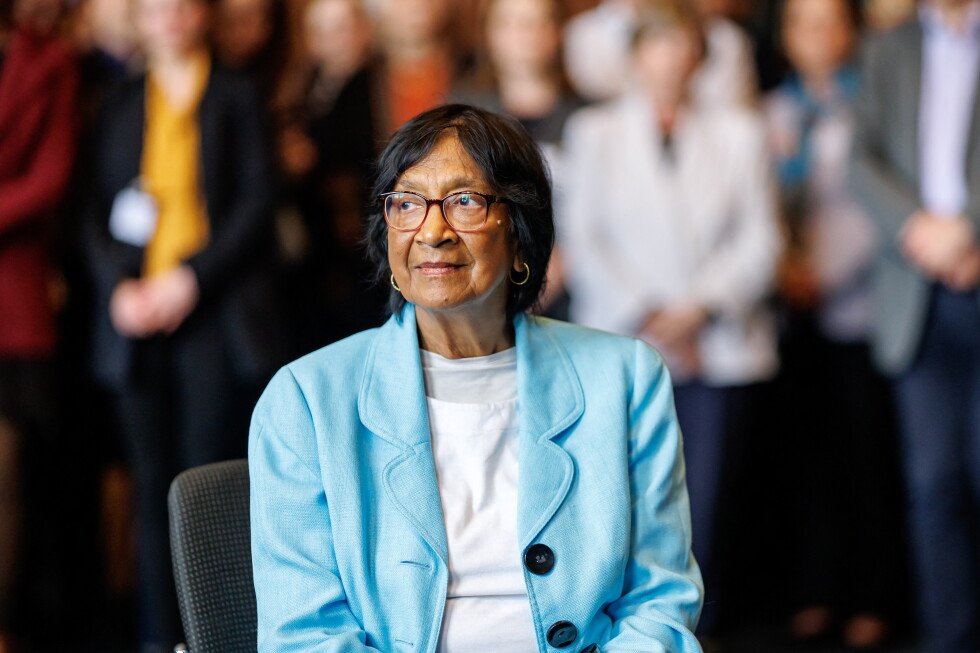
Navi Pillay speaks at the Nuremberg Forum in Nuremberg, Germany, after learning she had won the 2026 Nobel Peace Prize on October 9. Pillay's award drew praise from U.N. officials and criticism from Israel over her role in a U.N. inquiry into Gaza. | Daniel Karmann/picture-alliance/dpa/AP Images

Hilkka Pietila

Overview

03.13 pietila.jpg

Hilkka Pietilä born Kiikka, Finland March 13, 1931. Finnish ecofeminist and internationalist. Co-founded Finnish Women for Peace, 1979; chair and editor of Finnish UN Association, 1963-1990. Delegate to UN, 1965-67; 1970; 1972; 1974-75. Delegate to UNESCO, 1976; 1978; 1980. Delegate to international conferences on environment, 1972; population, 1974; development, 1979; women 1975, 1980, 1985, 1990.

Quotations

“Violence against women cannot be eliminated until real equality between men and women in private lives, politics, working life and culture at large is achieved. . . we must achieve a situation where men acknowledge women’s equal human dignity despite their differences and discover new, rich masculinity with all the possibilities entailed therein.” (“Violence Against Women—An Obstacle to Peace” 1998; photo hilkkapietila.net)

Amparo Poch y Gascon

Overview

10.15 poch crop.jpg

Amparo Poch y Gascón born Zaragosa, Spain October 15, 1902 (d. 1968). Spanish doctor, novelist, and anti-war poet; anarchist; pacifist; feminist. Founding president of WRI affiliate Hispanic League Against War, opposing Civil War, 1936. Organized refugee evacuation.

Quotations

“Our conscience flatly rejects war; Our heart cannot admit violence as reasonable and fair on any occasion. No event has wavered our convictions opposing war.” (1937 spanish Wikipedia; photo elperiodico.com)

Orlie Pell

Overview

12.13 pell.jpg

Orlie Pell born Paris, France December 13, 1900 (d. 1975). American peace leader; philosopher of ethics, pupil of John Dewey. Co-founded nonviolence monthly Liberation. President, WILPF New York Chapter; Treasurer, War Resisters League; National President, WILPF, 1957-61. Arrested for refusing shelter against atomic attack drill, 1955. She said the atomic alert forced her to confront her “innermost self” and choose civil disobedience.

Quotations

“Deep down inside: here I stand—I can do no other.” (Farrell, Spirit of the Sixties, p. 129; photo Swarthmore Peace)

Frances Fox Piven

Overview

10.10 piven.jpg

Frances Fox Piven born Calgary, Alberta, Canada October 10, 1932. Sociology professor, social activist, and antiwar leader. Democratic Socialist; influential theorist of social change.

Quotations

“I have considerable respect for non-violence, but I don’t treat it as inevitably a necessary rule. The reason I have respect for non-violence, is I think it helps to protect the protesters. . . Unless you have good reason for breaking the window, probably you shouldn’t do that. Unless it’s you know, a big part of your strategy.” (www.liveleak.com/view?i=ad1_1284522561#0DB9QCT6jB3BF0km.99)

“I think that we're at an alarming moment in American political development and maybe in world political development, because the United States is so influential. If the trends of the last thirty or forty years are not halted and reversed—and those trends include increasingly inequality, a crumbling public life, a disintegrating public infrastructure, an exhausted ecology, and a huge war arsenal, and more and more war making—then I'm rather gloomy about the prospects for the American future and the harm that the United States could do to the world.” (Who’s Afraid of Frances Fox Piven, p. 255, 2011; photo gc.cuny.edu)

Mathilde Planck

Overview

11.29 planck.png

Mathilde Planck born Ulm, Württemberg, Germany November 29, 1861 (d. 1955). German pacifist teacher and editor of women’s magazines. Peace leader; founded state branch of German Peace Society, 1900; co-founded women’s branch of German Peace Society. Sent telegraph to Kaiser in appeal for peace, July 1914. Longtime member of state parliament with priority of peace. Christian pacifist who “honoured Mahatma Gandhi and Christ equally.” (Mascha Riepl-Schmidt bio)

Quotations

“If something is needed, it’s got to be done.” (Rev. Harald Wagner, Heinigen; portrait Mathilde Planck Schule)

Mary Goddard Wigglesworth Pickering

Overview

Mary Goddard Wigglesworth Pickering born Boston, MA October 16, 1838 (d. 1909). Anti-imperialist; published Liberty Poems, a collection of poetry opposing US imperialism, 1900.

Quotations

And let thy flag, then honored, loved
Float o’er thy children free,
But never over conquered men,
Wherever they may be.

(“Arise Columbia”, Liberty Poems, p. 103)

Sara Hammond Palfrey

Overview

Sara Hammond Palfrey born Boston, MA December 11, 1823 (d. 1914). American poet; pacifist opposed to Spanish-American War.

Quotations

“The Holy Ghost is beginning to arouse the conscience of Christendom against the superstition of war. . .
’The strangers I sought in far-off lands
To plunder, to main, to slay,
To reave them of children and wives, their homes
In ashes so red to lay’
‘Ruffian! Murderer!’
‘Nay; for I followed the multitude,
When I went to do this evil;
The long streets cheered, and we called it War!’
‘Did Christ lead, or the devil?’”

(“Judgment to Come”, Springfield Republican, 1899 in Liberty Poems, p. 97)

Andrea Hofer Proudfoot

Overview

Andrea Hofer Proudfoot born March 2, 1865 (d. 1949). Children’s writer, active in kindergarten movement. Sponsored Disarm! Disarm!, the adaptation of Bertha von Suttner’s Die Waffen Nieder, and Suttner's US tour, 1913; founded Von Suttner League and League for International Amity 1913. Wrote Internationalism, 1913. Delegate to Women's Peace Congress, 1915. Supported postwar aid to Austria.

Quotations

On the Hague conference: “The hour is ripe for the peoples of this war-burdened Europe are so desperate over the agony and uncertainty in which they are constantly kept by the greedy ruling class that they are ready for the subject of disarmament as never before. . . And the women must kindle the sentiment among families and the masses. . . the women are the natural propagators. . . If we would down the war spirit at home and kill out the fear of war attack at home, we must kill out the spirit of hate from this side, where our war advisers so solemnly warn us our enemy is lurking.” (Advocate of Peace, 1915, vol. 75, p. 139)

Gabriele Petkevičaité-Bité

Overview

03.16 petkevicaite.jpg

Gabriele Petkevičaité-Bité born Puziniškis estate, Panevėžys, Russian Lithuania March 16, 1861 (d. 1943). Lithuanian writer. First chair of national constituent assembly which achieved peace and recognition from Russia and arbitration of Latvia boundary, 1920. Opposed World War I, which she feared would never end.

Quotations

“But those are not apple-blossoms which are looking at me! They are thousands and thousands of eyes! Living human eyes! But perishing! The moisture of great tears is trembling yet in them. . . And this requires no explanation. Those are the eyes of those being killed at the fronts.” (Joseph Canning, Power, Violence, ch. 11; photo wikipedia)

Adrienne Pine

Overview

11.27 pine crop.jpg

Adrienne Pine born Birmingham, AL November 27, 1970. Professor of medical anthropology; peace activist. Protested US support of army coup of Honduras, 2009; arrested for occupying Venezuelan embassy against attempted coup, DC, 2019.

Quotations

“If, by trying to protect the Venezuela embassy, I can help prevent my government from leading the world into this nightmare scenario, it will be well worth the potential damage to my career. Please join me.” (Common Dreams, May 16, 2019; photo American.edu)

Sylvia Plath

Overview

10.27 plath.jpg

Sylvia Plath born Boston, MA October 27, 1932 (d. 1963). Author, poet, and artist; life-long pacifist. At age of 13, wrote essay “A War to End All Wars”, 1945; “Youth’s Plea for World Peace”, 1950. Called Hiroshima “a sin.” Publicly opposed Korean War.

Quotations

“For me, the real issues of our time are the issues of every time—the hurt and wonder of loving; making in all its forms—children, loaves of bread, paintings, buildings; and the conservation of life of all people in all places, the jeopardizing of which no abstract doubletalk of ‘peace’ or ‘implacable foes’ can excuse.” (London Magazine, 1962; photo britannica.com)

Emily Frost Phipps

Overview

11.07 phipps crop.jpg

Emily Frost Phipps born Devonport, Devon, England November 7, 1865 (d. 1943). English barrister, teacher, and headmistress. Militant suffragist. Boycotted census by overnighting in sea cave, 1911. Opposed World War I with Women’s Freedom League. Ran for Parliament on antiwar platform, 1918.

Quotations

“Many women had determined that since they could not be citizens for the purposes of voting, they would not be citizens for the purpose of helping the government to compile statistics: they would not be included in the Census Returns.” (wikpedia; photo womwnofeastbourne)

Anna Parnell

Overview

05.13 parnell.jpg

Anna Parnell born Rathdrum, Wicklow, Ireland May 13, 1852 (d. 1911). Irish nonviolent independence leader. Co-founded Ladies’ Land League, which encouraged women to boycott and refuse land rent, 1881. Influenced nonviolent leader Michael Davitt.

Quotations

“I consider the actions of particular individuals are unimportant in history, while the actions of groups, classes, etc are most important, because the former are not met again, and the latter are. I don’t mean, of course, that the actions [in themselves] are unimportant, only that it does not matter what particular individual does them, except insofar and he or she represents a number of persons.” (to Helen Molony, Jul. 7, 1910, in T. W. Moody, “Anna Parnell”, Hermathena, Summer 1974, p. 12; photo Wikipedia)

Michelle Parlevliet

Overview

09.27 parlevliet crop.jpg

Michelle Parlevliet born Almelo, Netherlands September 27, 1971. Professor of Conflict Resolution and Human Rights, University of Amsterdam. Advisor to World Bank (Indonesia) and UN High Commissioner for Human Rights. International Criminal Tribunal for the Former Yugoslavia, 1996, 1998. South African Truth and Reconciliation Commission, 1997; Centre for Conflict Resolution in South Africa, 1999-2005; Conflict transformation adviser for Denmark in Nepal civil war, 2006-09.

Quotations

“Human rights violations do not only result from destructive conflict, but may also give rise to such conflict, both latent and manifest. Rights violations can trigger unrest and violence in the short and in the long term, when rights are denied over a sustained period.” (“Human Rights and Peacebuilding: Complementary and Contradictory, Complex and Contingent”, Journal of Human Rights Practice, Nov. 2017, pp. 333–57; photo University of Amsterdam)

Betty Polster

Overview

02.28 polster.jpg

Elizabeth “Betty” Polster  (née Henshaw) born PA February 28, 1925 (d. 2015).  Quaker pacifist; war tax refuser. National President WILPF, 1965-69. Moved to Canadian Argenta Quaker refuge for conscientious objectors in Vietnam War protest, 1967; attended Selma March with personal friend Martin Luther King, Jr. Active in Canadian Voice of Women (VOW); co-clerk of Canadian Friends Yearly Meeting. Principal, Argenta Friends School, 1970-80.

Quotations

“Those who protest government policies which involve us in war, which one believes to be wrong, are not cowards or anti-American–but are preserving our democracy.” (Oct. 1965, Beth Taylor, Excepts from Plain Language;  photo Legacy.com)

Penny Patch

Overview

12.30 patch.jpg

Penelope “Penny” Patch born Manhattan, NY December 30, 1943. Civil rights worker, Student Nonviolent Coordinating Committee (SNCC), 1962-65. First white woman to work for southern voter registration, often arrested. First arrested in Maryland sit-in, 1962; took part in anti-war protests Berkeley, 1965.

Quotations

“Intangible Implications of our aims and our work. . . I see it as the opening of doors to people who have always seen closed doors, seen them so much and for so long that they don't see the doors any longer.” (National Guardian, Feb. 28, 1963)

“[A]ll people, however powerless they might seem, carry within themselves the ability to make great change.” (Deep in Our Hearts, p. 166; photo sistermentors)